Most people who complain of ‘sciatica’ have a painful and unpleasant story to tell. They struggle to tie their shoes, drive, and complete simple tasks. This condition is typically associated with burning, numbness, tingling, or pain down the back of the leg. While these symptoms can be alarming, this page will disseminate fact from fiction and help you decide what type of consult (if any) is right for you.

What is sciatica?
Sciatica is an officially undefined term, therefore, not everybody talking about sciatica is referring to the same thing. It typically ends up being used as an umbrella term to describe back pain that travels down the leg.
Typically, the term describes one of two things. First, radiculopathy, which refers to leg pain or loss of normal function caused by a compressed nerve root. Symptoms could include leg pain, loss of sensation, strength, or diminished reflexes. Secondly, it may describe referred pain. This phenomenon occurs when pain experienced in one area of the body is simultaneously felt elsewhere, under the same cause.
Do I Need a Scan?
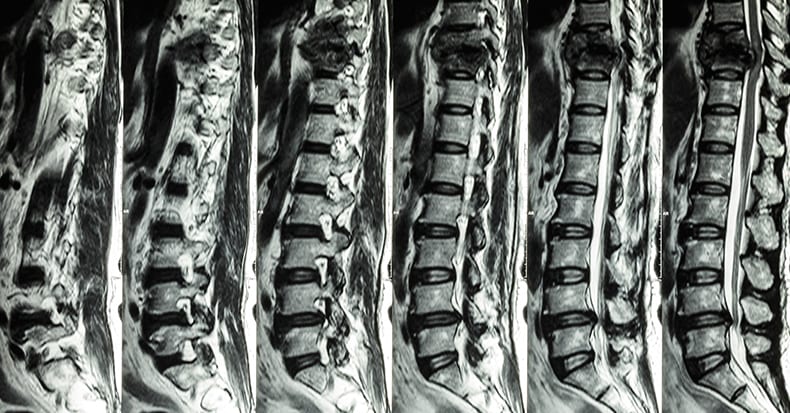
Generally, no. Rates of spinal imaging are high, with approximately 20-25% of people with back pain receiving a referral (1). This is despite guideline care recommending against this (1), as inappropriate referrals and subsequent misinterpretation worsen clinical outcomes (2). Why?
- Musculoskeletal pain is an unreliable indicator of tissue damage observed in imaging (3, 4). Therefore, it adds little to no insight into treatment.
- Moreover, non-anatomical factors contribute significantly to people's pain experience and course of recovery. Our feelings, expectations, and beliefs about our bodies can directly influence pain severity and recovery times (5).
- Additionally, most clinicians struggle with interpreting scans and communicating effectively with patients, often teaching harmful ideas such as “You have the spine of a 70-year-old,” “You shouldn’t lift more than 10kg or flex your spine,” or “You should be in a lot more pain than you are.” This overwhelmingly leads to pain-related fear, amplifying the pain experience (6). Furthermore, it disincentivizes Physiotherapy, as it involves exercise, likely reducing the chance of successful treatment if these false claims cannot be convincingly debunked.
Radiculopathies are most commonly blamed on a herniated disc crushing a nerve root. Although logical, herniated intervertebral discs are very common in those who don’t have pain and don’t go on to develop any (7). The majority of herniations heal. Interestingly, the “worse” or bigger they are, the more likely they are to heal. The size of the herniation is a poor indicator of pain or radicular symptoms (8, 9, 10). This isn't to say scans have absolutely zero relationship, but it’s quite weak and underwhelming. This suggests these symptoms are caused by more than just one singular anatomical cause.
When Do I Need to See a Doctor?
It is typically not needed in this case, but it is strongly recommended if:
The injury is preceded by a slip, fall, or other trauma, especially if you have difficulty bearing weight
Any bowel or bladder problems
Alternated sensation between your legs (Groin or “saddle” area)
Unexplained weight loss
Fevers
History of cancer
Night pains preventing you from sleeping
Radicular pain that is progressively worsening
Should I Get Surgery?
Besides some of the serious conditions we’re looking out for above (tumors, etc.), the answer is maybe. The evidence shows that those who are good surgical candidates have superior short-term outcomes, but in the long-term are equal to conservative treatment (11, 12). Therefore, this is something to be discussed on a case-by-case basis between yourself, your medical team, and your physiotherapist. If quicker short-term relief is extremely important to you due to significant discomfort or other obligations, it might make sense. However, I would typically advocate against surgery in the typical patient, as the risks associated with instrumenting your anatomy (re-ruptures, infection, etc.) on the whole do not outweigh the small, exclusively short-term benefits. A medical referral and surgical consult are commonplace in the case of someone making poor progress with Physiotherapy, and Physiotherapy is an essential component of post-op recovery.
When Do I Need to See a Physiotherapist?
If you have any of these pain or radicular symptoms and are anything but 100% confident in self-managing it yourself, you should see a Physiotherapist. This is because sub-par management can lead to a slower recovery and an increased likelihood of ongoing (chronic) pain. Additionally, Physiotherapy has been shown to be effective, especially with early intervention. Physiotherapy will accurately and confidently diagnose the condition, deliver an exercise-based treatment regime, and most importantly, cater this treatment to your own sporting goals and needs by incrementally preparing your body for a full return to training/competition.
Can I Still Lift or Train?
The million-dollar question. If it’s a run-of-the-mill low back pain/sciatica/radiculopathy as discussed, absolutely! The condition just has to be respected during this time to avoid flare-ups. It is certainly possible to maintain or make progress during this time. At Sports Physio Online, we typically employ a two-pronged approach to rehab. After careful assessment, we:
1. Provide treatment-specific or symptom-modifying exercises
2. Assess your entire programming/training routine to provide you with a brand new or highly modified training program to maximize ongoing gains or fitness adaptations while you recover. Worst case, our clients maintain their gains; best case, they're able to continue to progress while rehabbing, and that's what sets us apart.
References
- https://www.aafp.org/family-physician/patient-care/clinical-recommendations/all-clinical-recommendations/cw-back-pain.html.
- Van Hecke O, Torrance N, Smith BH. Chronic pain epidemiology and its clinical relevance. Br J Anaesth. 2013 Jul;111(1):13-8. doi: 10.1093/bja/aet123. PMID: 23794640; PMCID: PMC8023332.
Cohen M, Quintner J, van Rysewyk S. Reconsidering the International Association for the Study of Pain definition of pain. Pain Rep. 2018 Mar-Apr;3(2)
. doi: 10.1097/PR9.0000000000000634.